
If you’ve lived in Pittsburgh for more than a single winter, you know the drill. One day you’re enjoying a crisp 50-degree afternoon, and the next morning you’re chipping an inch of ice off your windshield while wondering if your car can make it up that 30-degree incline on your street. Between the “Burgh’s” famous hills, the unpredictable slush of the Parkway, and the sudden temperature drops, our tires go through a lot.
At Oakmont Automotive & Harmar Tire & Service, we talk to neighbors every day who are confused about what rubber belongs on their wheels. As a family-owned and veteran-owned business with two locations in Oakmont and Harmar, we’ve seen it all. The most common question we get as the leaves start to turn is: “Do I really need winter tires, or can I get away with All-Seasons?”
Lately, a third contender has entered the ring: the All-Weather tire. Today, we’re breaking down the differences between All-Season and All-Weather tires to help you decide which is the right investment for your Pittsburgh commute.
The Pittsburgh Problem: Why Your Tires Matter
Before we dive into the specs, let’s talk about our local terrain. Driving in Pittsburgh isn’t like driving in the flat midwest. We have more bridges than Venice and hills that would make a mountain goat think twice. When winter hits, these roads become a testing ground for tire grip.
Standard tires aren’t just about tread; they’re about chemistry. The rubber compound in your tires reacts to the temperature. When it gets cold, some tires turn hard as a hockey puck, losing their ability to “grip” the asphalt. This is why choosing the right category is about more than just avoiding a flat, it’s about staying on the road when everyone else is sliding.
All-Season Tires: The “Jack of All Trades”
Most vehicles leave the dealership with All-Season tires. For many years, they were the default choice for anyone not living in the Arctic Circle.
What They Are
All-Season tires are designed to provide a smooth, quiet ride in a variety of conditions, including dry pavement and wet roads. They are built to last a long time, often coming with 60,000 to 80,000-mile warranties.
The Pros:
- Longevity: They generally have the longest tread life of any tire category.
- Fuel Efficiency: Lower rolling resistance means you might squeeze a few extra miles out of every tank.
- Quiet Comfort: The tread patterns are designed to minimize road noise on the highway.
- Cost: Because they are the most common tire produced, they are often the most budget-friendly option.
The Cons (The “Pittsburgh Caveat”):
The name “All-Season” is a bit of a misnomer in Western Pennsylvania. These tires are really “Three-Season” tires.
- The 45-Degree Rule: Once the temperature drops below 45°F, the rubber in All-Season tires begins to harden. This reduces traction significantly, even if the road is dry.
- Light Snow Only: They are designed for “light snow.” If you’re trying to navigate a slushy hill in Penn Hills or a snow-covered bridge over the Allegheny, All-Seasons often lack the “bite” needed to move forward safely.
All-Weather Tires: The Real Four-Season Solution
In the last few years, All-Weather tires have become the “goldilocks” solution for drivers in climates like ours. They bridge the gap between the year-round convenience of an All-Season and the safety of a dedicated winter tire.
What They Are
The defining characteristic of an All-Weather tire is the Three-Peak Mountain Snowflake (3PMSF) symbol on the sidewall. This is an industry-standard rating that proves the tire has passed rigorous testing in severe snow conditions.
The Pros:
- Severe Snow Rated: Unlike All-Seasons, these are legally and technically rated for severe winter weather.
- Flexible Rubber: The compound is engineered to stay soft and grippy even when the temperature plunges well below freezing.
- No Seasonal Swaps: You don’t have to worry about storing a second set of tires in your garage or paying for a changeover twice a year.
- Superior Wet Traction: The more aggressive tread patterns are excellent at evacuating slush and heavy rain, reducing the risk of hydroplaning.
The Cons:
- Tread Wear: Because the rubber is slightly softer, they may wear out a bit faster than a traditional All-Season, especially during our hot Pittsburgh summers.
- Slightly Noisier: You might notice a bit more hum on the highway due to the deeper tread blocks.
- Higher Initial Cost: They typically cost a bit more upfront than a standard All-Season tire.
How They Compare: At a Glance
| Feature | All-Season Tires | All-Weather Tires |
|---|---|---|
| Best Temperature Range | Above 45°F | All temperatures (certified for below freezing) |
| Snow/Ice Performance | Poor to Fair (Light snow only) | Good to Great (Severe snow rated) |
| Tread Life | Excellent (60k-80k miles) | Good (40k-60k miles) |
| Ride Comfort | Very Quiet | Moderate |
| Pittsburgh Hill Climbing | Struggles in slush | Much more reliable |
| 3-Peak Mountain Rated? | No | Yes |
Which One Is Right For You?
Choosing between these two depends on your specific lifestyle and where you live in the Pittsburgh area.
Choose All-Season Tires if:
- You do the vast majority of your driving in the city where roads are salted and plowed immediately.
- You have a secondary vehicle with 4WD or winter tires for “snow days.”
- You drive high mileage annually and want the longest tread life possible.
- You are on a strict budget and rarely have to drive in unplowed conditions.
Choose All-Weather Tires if:
- You live on a hill or in an area that isn’t the first to see a salt truck.
- You have a job that requires you to be at work regardless of the weather (healthcare workers, first responders, etc.).
- You want the safety of a winter tire but don’t want the hassle or expense of owning two sets of tires.
- You want peace of mind knowing your vehicle is prepared for a sudden Lake Erie-effect snow squall.
Don’t Forget the Basics: Maintenance Matters
Regardless of which tire you choose, neither will perform correctly if they aren’t maintained. Our certified technicians always recommend:
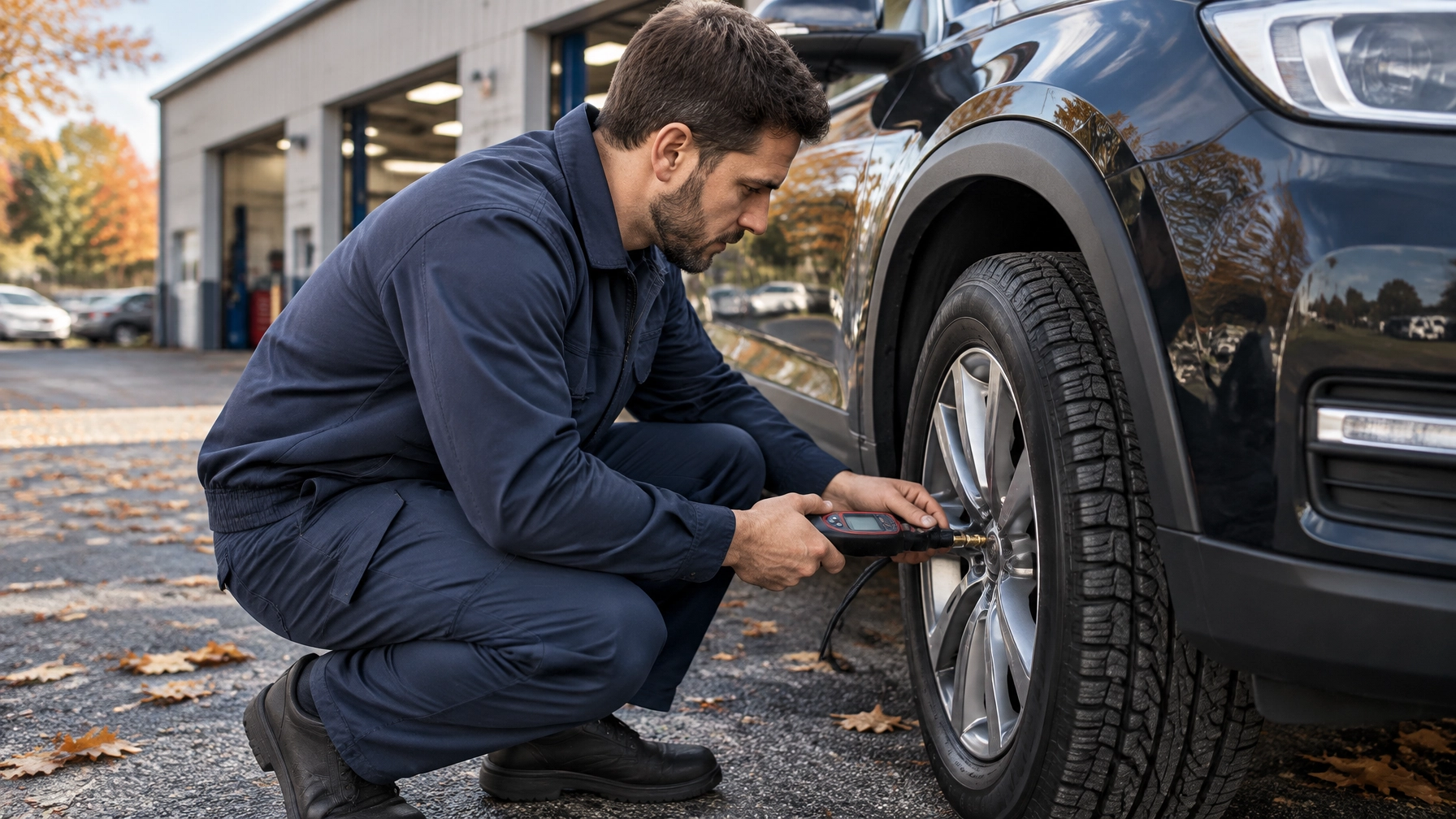
- Pressure Checks: For every 10-degree drop in temperature, your tires can lose 1-2 pounds of pressure. Under-inflated tires are dangerous and wear out faster.
- Regular Rotations: To get the most life out of your investment, you should rotate your tires every 5,000 to 7,000 miles.
- Wheel Alignments: Pittsburgh potholes are legendary. One bad hit on Route 28 can knock your car out of alignment, causing your brand-new tires to wear unevenly in a matter of weeks.
Why Trust Oakmont Automotive & Harmar Tire & Service?
We know you have a lot of choices when it comes to tire service in the Pittsburgh area. We want to be your first choice because we treat our customers like family.
As a veteran-owned shop, we pride ourselves on discipline, honesty, and hard work. We don’t believe in “hidden surprises” or high-pressure sales. When you come into our Oakmont or Harmar locations, we’ll give you a straight answer about the condition of your tires and help you find the best fit for your budget and driving habits.
Plus, we back our work with a 24-month/24,000-mile nationwide warranty through the TechNet Professional Network. Whether you’re driving across town or across the country, we’ve got your back.
The Bottom Line
For most Pittsburgh drivers who want a single tire to handle everything our “four seasons in one day” weather throws at them, All-Weather tires are the superior choice. They provide the safety margin you need for our hills and winters without the inconvenience of seasonal swaps.
However, if you’re still unsure, stop by either of our locations. We can take a look at your current tread depth, talk about your daily commute, and give you a professional recommendation.
Ready to get your vehicle winter-ready? Contact us today to schedule a tire consultation or an inspection. Let’s make sure your “Pittsburgh Drive” is a safe one.