
Pittsburgh winters can change quickly. A clear morning in Verona or Plum can turn into snow, slush, freezing rain, or black ice by the afternoon. Hills, bridges, shaded roads, and potholes add more challenges for drivers in Pittsburgh, New Kensington, and surrounding communities.
That raises an important question: Do you need dedicated winter tires, or are quality all-season tires enough?
The honest answer depends on your vehicle, your route, your schedule, and how often you drive in poor conditions. This guide explains the differences so you can make a practical choice before winter arrives.
All-Season Tires: A Practical Year-Round Compromise
All-season tires are designed to handle a mix of dry roads, rain, mild cold, and light snow. They are popular because you can use one set throughout the year without scheduling seasonal tire changes.
For many Pittsburgh-area drivers, quality all-season tires are a reasonable choice when:
- You mainly drive on plowed roads and major highways.
- You can postpone trips during severe snow or ice.
- Your vehicle has good tread and properly inflated tires.
- Your commute does not regularly include steep, untreated hills.
- You want to avoid the cost and storage needs of a second tire set.
All-season tires offer balanced performance. They are generally quieter and more comfortable in warm weather than winter tires. They also avoid the twice-yearly changeover that comes with maintaining separate summer and winter sets.
However, “all-season” does not mean “ideal in every season.” The rubber compound and tread pattern are designed as a compromise. When temperatures drop and roads become snowy or icy, standard all-season tires may not provide the same traction as winter tires.

Winter Tires: More Grip in Cold, Snow, and Ice
Winter tires are built specifically for cold-weather driving. Their rubber compounds remain more flexible in freezing temperatures, while their tread patterns use additional grooves and biting edges to help grip snow and slush.
That added traction can help with:
- Starting from a stop on a snowy hill.
- Stopping on packed snow.
- Steering through slushy turns.
- Maintaining control on cold pavement.
- Getting across bridges and shaded roads that may freeze first.
Winter tires are worth serious consideration if you:
- Must drive regardless of the forecast.
- Leave for work before roads are plowed or treated.
- Regularly travel steep neighborhood roads.
- Drive on rural or secondary roads that stay snowy longer.
- Carry family members or passengers and want more cold-weather traction.
- Have experienced your current tires spinning or sliding in winter conditions.
Dedicated winter tires will not eliminate the risks of ice or freezing rain. No tire can make a slick road completely safe. You still need to slow down, leave extra following distance, and avoid sudden braking or steering. Winter tires simply give you more traction to work with.
The National Highway Traffic Safety Administration recommends checking tire condition, tread, pressure, and damage before winter travel. It also advises drivers to consider snow tires when preparing for winter weather.
Pittsburgh Hills Make Tire Choice More Important
Flat, plowed roads are easier to manage than steep, untreated streets. Pittsburgh’s hills can make a noticeable difference in winter driving.
A vehicle may move adequately on level snow but struggle when climbing a hill. Once the tires begin spinning, momentum disappears quickly. On the way down, worn or hard tires may have trouble stopping before an intersection.
This matters for drivers commuting through areas such as:
- Verona and Oakmont
- Plum
- New Kensington
- Harmar Township
- Pittsburgh neighborhoods with steep side streets
- Bridges, ramps, and shaded roads near the rivers
All-wheel drive and four-wheel drive can help a vehicle accelerate, but they do not replace tire traction when braking or turning. Your tires are the part of the vehicle that contacts the road, so their condition and design directly affect control.
Freezing Rain and Slush Require a Careful Approach
Snow is not the only winter concern in Western Pennsylvania. Freezing rain can create a thin layer of ice that is difficult to see. Slush can also reduce traction and increase the risk of hydroplaning.
Winter tires can provide better grip on cold pavement and packed snow. Their flexible rubber and tread design are helpful when temperatures remain low. All-season tires may be adequate for wet roads and light snow, but worn or poorly inflated tires can struggle in slush and freezing conditions.
If your commute includes bridges, elevated roadways, shaded hills, or roads that are not treated quickly, consider the extra margin offered by winter tires. If you prefer one set of tires, ask a qualified tire professional whether a quality all-weather tire may be a better fit than a basic all-season design. All-weather tires are different from traditional all-season tires and are designed with stronger cold-weather capability.
The Cost of a Second Set of Winter Tires
The main disadvantage of winter tires is cost and convenience. You will need to purchase a second set and arrange for seasonal installation or storage.
Your costs may include:
- Four winter tires.
- Mounting and balancing.
- Seasonal changeovers.
- A second set of wheels, if desired.
- Storage between seasons.
A second wheel set can make seasonal changes simpler and reduce the need to repeatedly mount and dismount tires. It may also help protect your preferred wheels from winter salt, slush, and road debris.
Winter tires should not stay on the vehicle through warm weather. Their softer compounds can wear more quickly when driven on warm, dry pavement. Switching between winter and all-season tires also allows each set to be used during the conditions for which it was designed.
Ask a trusted tire shop in Pittsburgh about tire sizing, seasonal storage, installation, balancing, and the best setup for your vehicle.
One Set or Two? Use This Simple Decision Guide
Choose quality all-season tires if:
- You mostly drive on treated roads.
- You can work from home or delay travel during major storms.
- Your current tires have strong tread and no damage.
- You want lower upfront costs.
- You do not want to manage seasonal storage.
- Your commute rarely includes steep, untreated roads.
Quality matters. A worn all-season tire is not a good winter tire simply because it has an all-season label. Check the tread and sidewalls for cuts, cracks, bulges, and uneven wear.
Choose winter tires if:
- You must drive early in the morning or during active storms.
- You regularly travel on steep roads.
- Your route includes untreated side streets or rural roads.
- You want the strongest cold-weather traction available.
- You have had trouble stopping or climbing hills with all-season tires.
- You are comfortable paying for a second set and seasonal changes.
Consider all-weather tires if:
- You want one set for the entire year.
- You drive in more snow than a typical all-season tire can handle.
- You want improved winter performance without storing two sets.
- You accept that a one-set solution may not match dedicated winter tire performance.
There is no universal answer. A technician can help compare your tire condition, driving habits, vehicle, and budget instead of pushing you toward the most expensive option.
Check Alignment and Tire Condition Before Winter
Pittsburgh potholes can damage wheels, steering components, and suspension parts. Even a minor impact can affect wheel alignment.
Signs you may need a wheel alignment in Pittsburgh include:
- The vehicle pulls to one side.
- The steering wheel is off-center.
- The tires wear more on one edge.
- The vehicle vibrates or feels unstable.
- The car does not track straight after hitting a pothole.
An alignment will not improve a tire that is already worn out, but it can help protect new tires from uneven wear. Oakmont Automotive & Harmar Tire & Service provides tire mounting, balancing, rotations, and alignment checks for cars, trucks, and SUVs.
Before winter, also check:
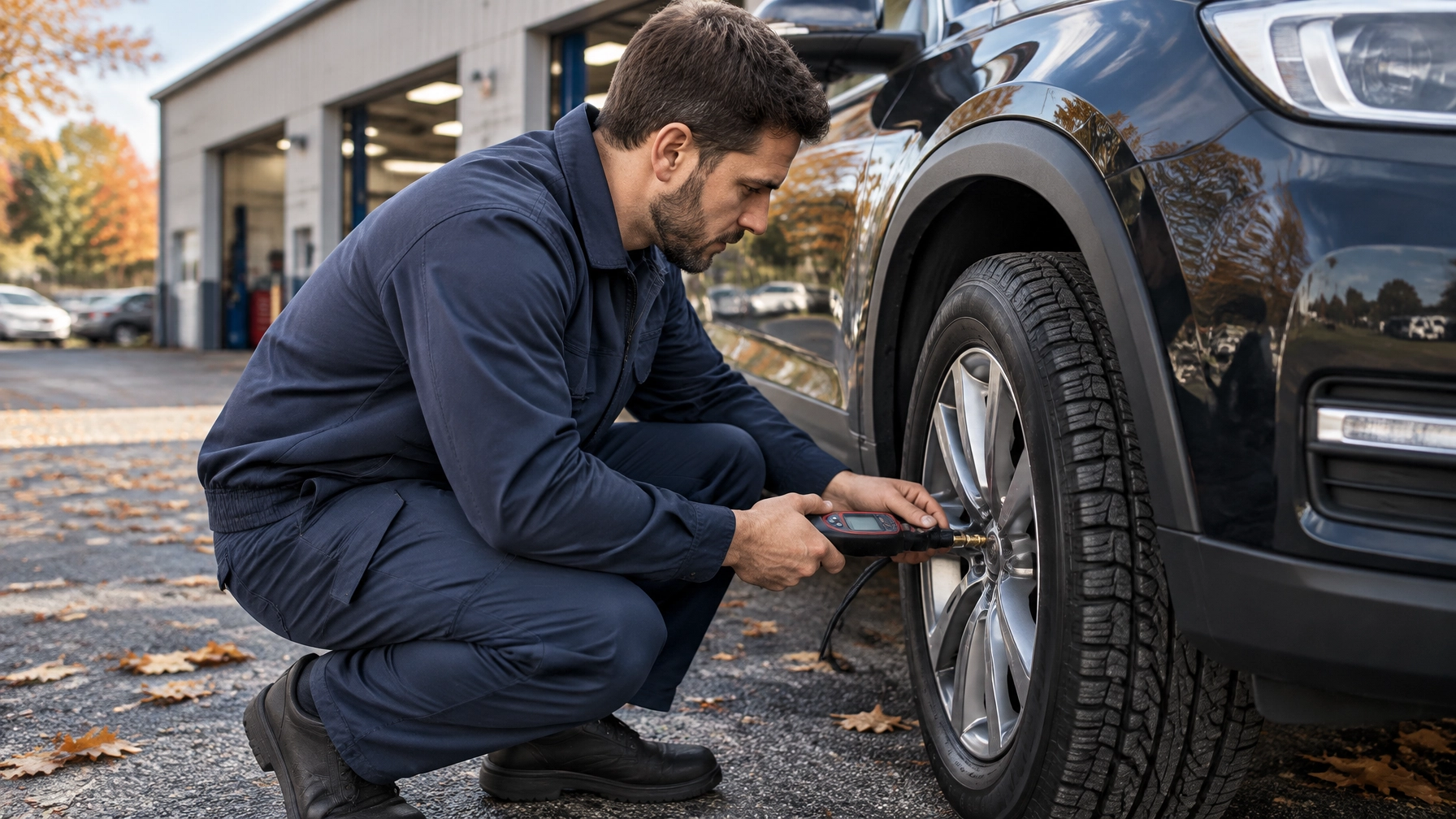
- Tire pressure when the tires are cold.
- Tread depth and wear patterns.
- Sidewall damage.
- The spare tire.
- Wheel balance after pothole impacts.
- Brakes, battery, wipers, lights, and coolant.
PennDOT recommends checking tire inflation and tread before winter and notes that drivers in areas prone to heavy snow may want dedicated snow tires. Read its winter preparation guidance for additional vehicle and emergency-kit recommendations.

Prepare Your Whole Vehicle, Not Just Your Tires
Good tires are essential, but winter reliability depends on the entire vehicle. Weak batteries work harder in cold weather. Worn wipers reduce visibility. Low coolant or a weak defroster can create problems when temperatures drop.
Schedule a pre-winter inspection if you notice changes in handling, braking, starting, or visibility. Routine maintenance also matters. If your vehicle is due for an oil change in Verona, PA, combining that service with a tire and winter-readiness check can save you an extra visit.
Oakmont Automotive & Harmar Tire & Service is family-owned and veteran-owned, with a focus on clear recommendations and transparent communication. Our certified technicians explain what your vehicle needs and what can wait. We provide service for all makes and models, along with mounting, balancing, rotations, alignments, and full auto repair in Pittsburgh.
Qualifying services are backed by a 24-month/24,000-mile nationwide TechNet warranty. Flexible Synchrony Car Care financing is also available for approved customers when a larger repair or tire purchase is needed.
The Bottom Line for Pittsburgh Drivers
For many Verona, Plum, New Kensington, and Pittsburgh commuters, good-quality all-season tires are sufficient when roads are usually plowed and severe weather can be avoided.
Dedicated winter tires make more sense when you drive every day in snow and freezing temperatures, travel steep hills, or need the greatest possible traction before roads are cleared. All-weather tires may provide a middle-ground option for drivers who want better winter performance without maintaining two sets.
Do not wait for the first snow to inspect your tires. Check tread, pressure, alignment, and overall condition now. Visit a trusted tire shop in Pittsburgh or contact Oakmont Automotive & Harmar Tire & Service to discuss the right setup for your commute.
Book now and get your vehicle ready for winter with straightforward advice and dependable service.