
Living in the Pittsburgh area, we all know the drill. Once a year, that little colored sticker on your windshield stares you down, reminding you that it’s time for your Pennsylvania State Inspection. Whether you’re heading to our shop in Verona or stopping by in Harmar, the goal is always the same: get in, pass the test, and get back on the road with peace of mind.
However, for many drivers in Plum, New Kensington, and across Allegheny County, the inspection process feels more like a trip to the principal’s office than a routine maintenance check. We see a lot of the same avoidable mistakes every single week. These errors don’t just cost you time; they can lead to unnecessary stress and even a “failed” result for things you could have fixed in your own driveway for five dollars.
At Oakmont Automotive & Harmar Tire & Service, we believe in transparent service. We want you to pass. We want your car to be safe for your family and everyone else on the road. To help you breeze through your next appointment, we’ve rounded up the seven most common mistakes people make with their PA State Inspection and, more importantly, exactly how you can fix them.
1. Arriving Without the Right Paperwork
It sounds simple, but you would be surprised how many inspections are stalled before they even begin because of a missing piece of paper. In Pennsylvania, a technician cannot legally complete your inspection without two specific, valid documents: your vehicle registration and your proof of insurance.
Often, drivers realize their registration expired a few days prior, or they have an old insurance card in the glovebox while the current one is buried in an email inbox. Without these, we can’t enter your vehicle information into the state’s system.
How to Fix It:
Before you head out for your car inspection in Pittsburgh, do a quick paperwork audit. Make sure your registration is current and your insurance card hasn’t expired. If you use digital insurance cards, ensure you have them downloaded or printed out. Taking thirty seconds to check this at home saves you from a frustrating “we can’t do it today” conversation at the shop.
2. Ignoring the “Small” Light Bulbs
Did you know that a single burnt-out bulb is the number one reason vehicles fail the safety portion of the PA State Inspection? It’s not always a headlight or a brake light, either. Pennsylvania law requires almost every exterior light on your vehicle to be functional, including your turn signals, reverse lights, and even that tiny little light that illuminates your license plate.
Many drivers don’t notice a license plate light is out because they aren’t looking for it. But to a certified inspector, it’s a mandatory “fail” item that requires a repair before a new sticker can be issued.
How to Fix It:
Perform a “walk-around” check the night before your appointment. Turn on your headlights and hazard flashes, then walk around the car to ensure every bulb is glowing. Have a friend or family member tap the brakes while you stand behind the vehicle. If you find a dead bulb, contact us or swap it out yourself. It’s a cheap fix that prevents an official failure on your vehicle’s record.
3. Resetting the Check Engine Light Right Before the Test
This is a classic mistake, especially for the emissions portion of the test. If your check engine light is on, your car will automatically fail the emissions inspection in Allegheny County. In an attempt to “beat the system,” some drivers will disconnect the battery or use a cheap code scanner to clear the light right before pulling into our parking lot.
Here’s the catch: your car’s computer has “readiness monitors.” When you clear a code, those monitors reset to “not ready.” Pennsylvania’s emissions equipment will see that the monitors haven’t completed their self-tests and will reject the vehicle. You won’t pass until those monitors are set, which usually requires driving 25 to 50 miles in various conditions.
How to Fix It:
Don’t try to hide the light. If that orange glow is haunting your dashboard, schedule a diagnostic service a few weeks before your inspection is due. We can find the root cause, fix it, and ensure your car is actually ready for the emissions test. If you did recently clear a code or replace a battery, make sure to drive the vehicle for a few days before bringing it in.

4. Betting on “Just Enough” Tire Tread
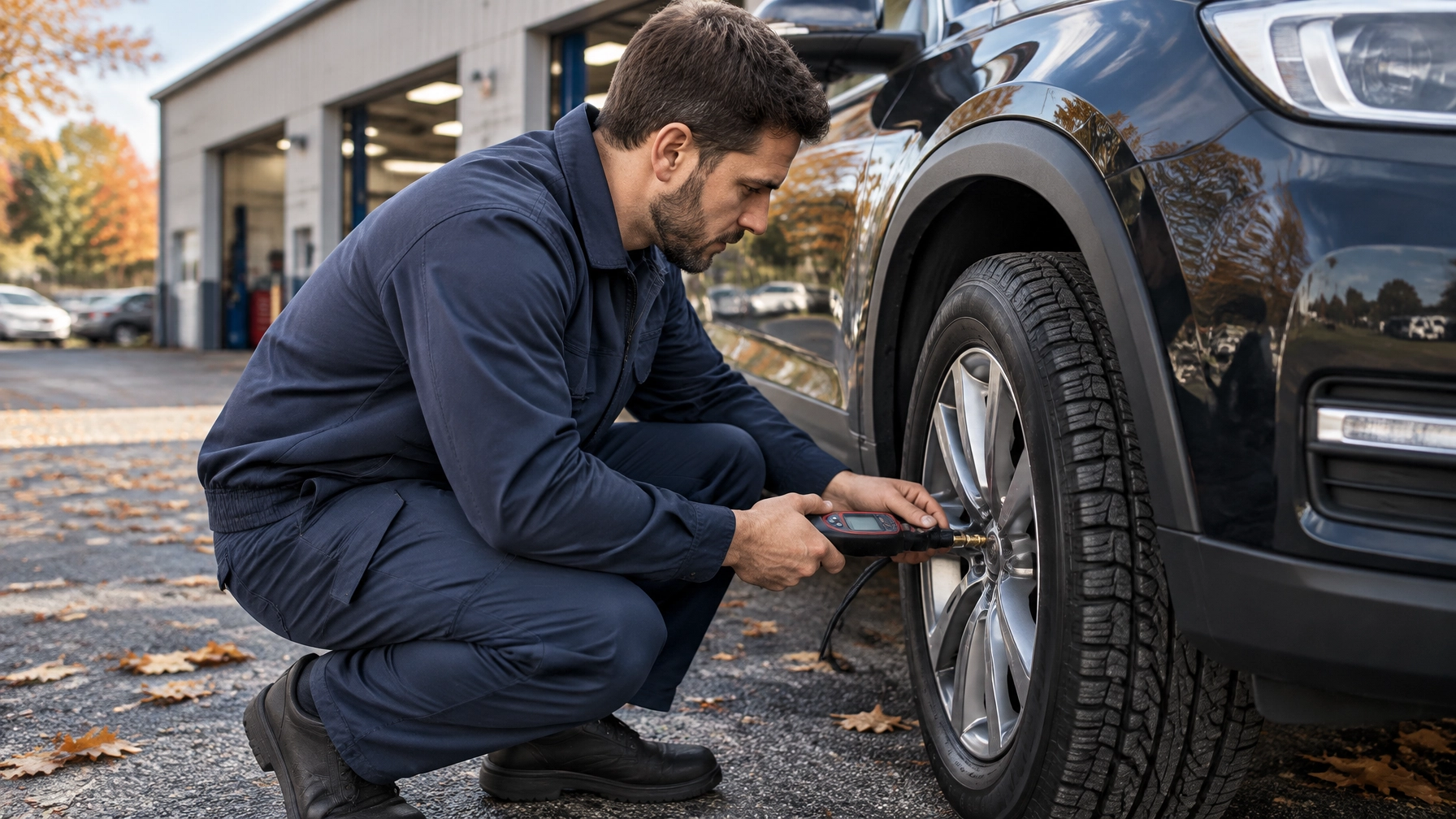
Tires are the only thing connecting your car to the road, so Pennsylvania is strict about their condition. The legal minimum tread depth is 2/32 of an inch. However, many people wait until they are right at that limit before thinking about replacements. If one edge of your tire is worn more than the other due to a bad alignment, you might fail even if the rest of the tire looks “okay.”
Driving on thin tires in Pittsburgh’s rainy and snowy weather isn’t just an inspection risk; it’s a safety hazard. Hydroplaning becomes a very real threat when your tires can’t channel water away.
How to Fix It:
Check your tires using the “penny test” or look for the wear bars built into the tread. If the tread is level with those bars, it’s time for new rubber. We offer comprehensive tire services, including mounting and balancing, at both our locations. If you’re unsure, stop by for a quick check. It’s better to know you need tires ahead of time so you can plan your budget, perhaps taking advantage of our flexible financing through Synchrony Car Care.
5. Playing “Inspection Roulette” with the Expiration Date
Waiting until the final days of the month to book your appointment is a high-stakes game. If your vehicle fails for a part that needs to be ordered: like a specific suspension component or a custom exhaust piece: you might find yourself driving on an expired sticker while you wait for the repair.
Furthermore, if your car fails, you have a 30-day window to get it repaired and reinspected. If you wait until the 31st of the month, that window doesn’t help you much because your sticker is already dead.
How to Fix It:
You can get your vehicle inspected up to 90 days before your current sticker expires. We recommend scheduling your pa state inspection near me at least two to three weeks before the end of the month. This gives us plenty of time to handle any repairs, perform the work, and get you back on the road without you having to worry about a ticket from the local police.
6. Overlooking Wipers and Windshield Cracks
We often focus on the engine and brakes, but visibility is just as critical for safety. In Pennsylvania, your windshield wipers must be able to clear the glass effectively without streaking or tearing. If the rubber is hanging off the blade, that’s a failure.
Similarly, windshield cracks are a frequent point of contention. While not every small chip is a fail, any crack that is in the “driver’s side wing area” or interferes with the driver’s vision will result in a rejected inspection.
How to Fix It:
Replace your wiper blades every six months or at the first sign of streaking. It’s a simple, proactive way to ensure you pass this portion of the test. If you have a crack in your windshield, have it evaluated early. Small chips can often be repaired before they spread into “inspection-failing” cracks.
7. Ignoring Noises and “Feeling” Issues
Sometimes your car is trying to tell you it’s going to fail. If you hear a squeak every time you hit the brakes or feel a clunk when you go over a pothole in Verona, those aren’t just annoyances: they are signs of worn brake pads or loose suspension components.
Inspectors look closely at your steering and suspension. If a ball joint is loose or a shock absorber is leaking fluid, the vehicle is considered unsafe. Ignoring these signs doesn’t make them go away; it just ensures you’ll be hit with a repair bill on the day of your inspection.
How to Fix It:
Listen to your car. If something feels off, bring it in for a check-up before your inspection month. Our technicians are industry-certified and use advanced diagnostic equipment to find issues before they become emergencies. Address brake repairs early to ensure your rotors stay in good shape and your safety is never compromised.
Why Trust Oakmont Automotive & Harmar Tire & Service?
We know you have choices when it comes to finding a state inspection station. As a family-owned and veteran-owned business, we pride ourselves on being a proactive partner in your vehicle’s safety. We don’t just hand you a bill; we explain exactly what your vehicle needs to meet Pennsylvania’s standards.
When you bring your vehicle to us, you benefit from:
- National Protection: As members of the TechNet Professional Network, we offer a 24-month/24,000-mile nationwide warranty on qualifying repairs.
- Convenience: We offer loaner vehicles and shuttle services so your day doesn’t have to stop just because your car is in the shop.
- Transparency: No hidden surprises. We provide honest, straightforward communication about every repair.
- Expertise: Our technicians are continuously trained to handle all makes and models, ensuring high-quality workmanship every time.
Don’t let your annual inspection become a source of stress. By avoiding these seven common mistakes, you can ensure a smooth, successful visit. Whether you’re in Verona, Harmar, or anywhere in the Pittsburgh area, we’re here to help you stay safe on the road.
Ready for your sticker? Book your appointment online or call us today at our Oakmont or Harmar locations!