
There is nothing quite like the feeling of pulling out of your driveway in Verona or Plum with a full tank of gas and a long stretch of highway ahead of you. Whether you’re heading toward the shore, winding through the Laurel Highlands, or trekking across the state, a summer road trip is a classic tradition. But before you get lost in your favorite playlist, there is one thing that can bring your vacation to a grinding halt: a preventable mechanical breakdown.
At Oakmont Automotive & Harmar Tire & Service, we see it every year. Drivers get so caught up in packing the cooler and booking the hotel that they forget the four things actually carrying them to their destination: their tires. Summer heat in Pennsylvania is more than just uncomfortable for you; it is incredibly taxing on your vehicle’s rubber and cooling system. Before you hit the turnpike, taking a few minutes to perform these essential checks: or stopping by a trusted tire shop in Pittsburgh: can be the difference between a scenic drive and a long wait for a tow truck.
The Science of Heat and Your Tires
Most people associate tire blowouts with winter potholes, but the reality is that summer is “blowout season.” When you drive at highway speeds, the friction between the road and your tires generates significant heat. Add to that an ambient temperature of 90 degrees and asphalt that can reach 140 degrees, and you have a recipe for disaster.
Heat causes the air inside your tires to expand. For every 10-degree rise in temperature, your tire pressure can increase by about one pound per square inch (PSI). While this might sound like it helps an underinflated tire, it actually creates internal stress. If your tires are old, worn, or already improperly inflated, this extra pressure and heat can cause the rubber to delaminate or the sidewall to fail.
Checking Your Tire Pressure the Right Way
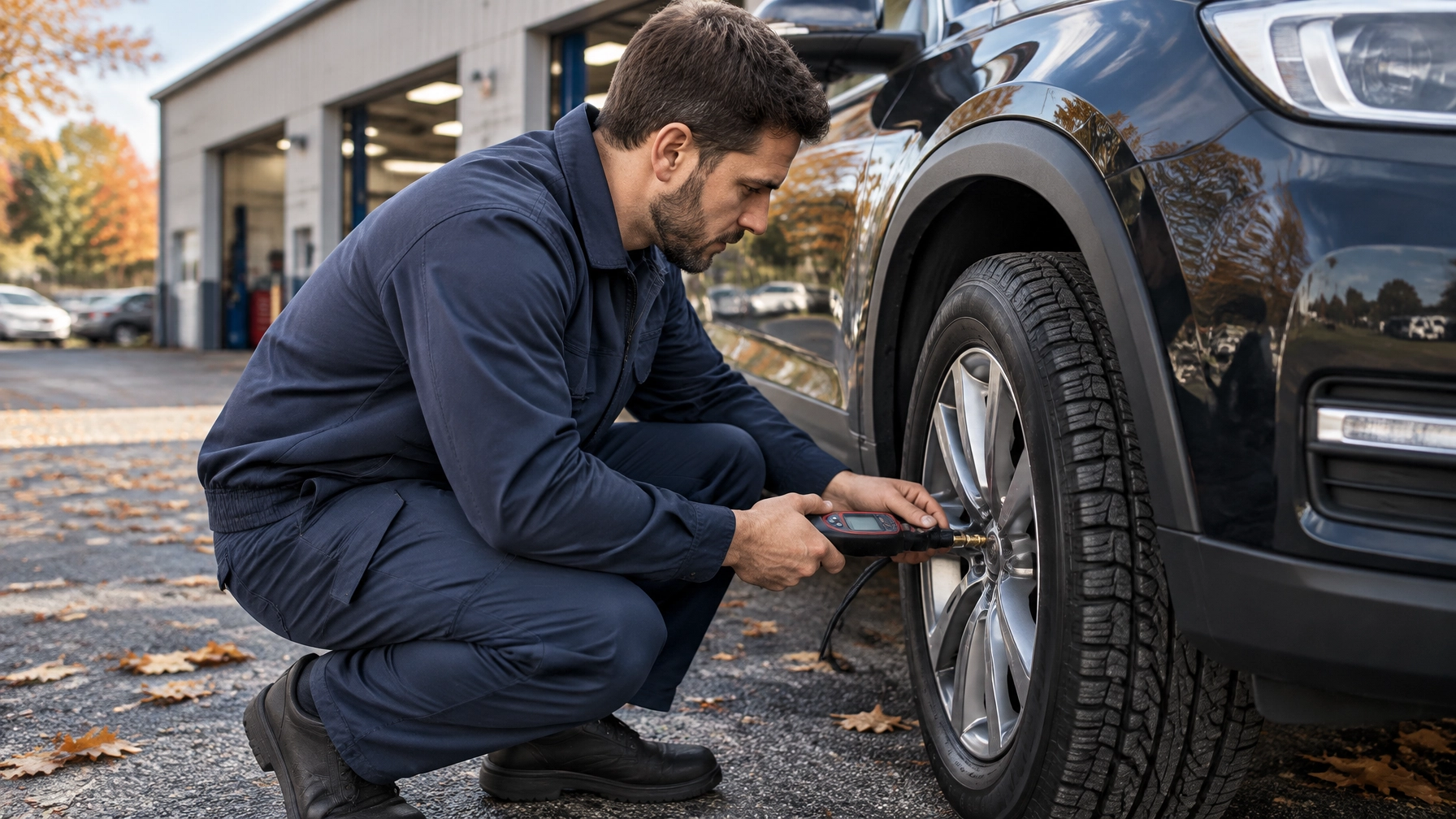
Don’t rely on your eyes to tell you if a tire is low. Modern radial tires can be significantly underinflated and still look perfectly round. You need a reliable gauge.
- Find the Right Number: Forget the PSI number listed on the sidewall of the tire itself: that is the maximum pressure the tire can hold, not what your car needs. Instead, look at the sticker on your driver-side door jamb. That is the manufacturer-recommended pressure for your specific vehicle.
- Check Them Cold: Always check your pressure before you start driving or at least three hours after you’ve stopped. “Cold” air gives you the most accurate reading.
- Don’t Forget the Spare: There is nothing more frustrating than getting a flat tire on a road trip, only to discover your spare tire is also flat. Give it a quick check and top it off.
Tread Depth: Your Grip on the Road
Summer storms in the Pittsburgh area can turn a dry highway into a slip-and-slide in seconds. Your tire tread is designed to channel water away from the contact patch, allowing the rubber to maintain a grip on the pavement. If your tread is too low, you risk hydroplaning, which is essentially your car “surfing” on a thin layer of water with zero steering or braking control.
A quick way to check this at home is the “Penny Test.” Insert a penny into the tread groove with Abraham Lincoln’s head facing down. If you can see the top of his head, your tread is below 2/32 of an inch, and you need to visit a tire shop in Pittsburgh immediately. At Oakmont Automotive & Harmar Tire & Service, we generally recommend replacing tires once they hit 4/32 of an inch, especially before a long road trip where you might encounter heavy rain.

Inspecting for Hidden Damage
While you’re down there checking the tread, take a close look at the sidewalls. Road trips often involve heavy loads: extra passengers, luggage, and maybe a bike rack. This extra weight puts more stress on the tire’s structure. Look for:
- Bulges or Bubbles: These indicate that the internal frame of the tire has been damaged, often by a pothole or curb. This is a “replace now” situation.
- Cracking or Dry Rot: If your car sits outside frequently, the sun’s UV rays can break down the rubber. If you see fine cracks in the sidewall, the tire is losing its integrity.
- Uneven Wear: If one side of the tire is wearing faster than the other, your wheel alignment is likely off. A wheel alignment in Pittsburgh is a small investment that prevents you from ruining a brand-new set of tires over the course of a 500-mile trip.
The Cooling System: Preventing a Summer Meltdown
While tires are the most critical safety check, your cooling system is the most critical “staying on the road” check. An overheating engine isn’t just an inconvenience; it can lead to catastrophic engine failure.
In the winter, your cooling system has a relatively easy job. In the summer, while you’re climbing hills or sitting in traffic near the Squirrel Hill Tunnel with the AC blasting, that system is working overtime.
Coolant Levels and Condition
With the engine completely cool, check your coolant reservoir. The fluid should be between the “Min” and “Max” lines. If it looks rusty, brown, or has oily film floating in it, you likely need a flush. Old coolant loses its ability to inhibit corrosion and can lead to clogs in your radiator or heater core.
Hoses and Belts
Give your radiator hoses a quick squeeze (again, only when the engine is cold!). They should feel firm but flexible. If they feel brittle, crunchy, or excessively soft and “squishy,” they are at risk of bursting under pressure. Check your serpentine belt for any fraying or glazing. This belt drives your water pump and your alternator; if it snaps, your trip ends right there.
Why a Professional Pre-Trip Inspection Matters
You can do a lot of these checks in your own driveway in New Kensington or Oakmont, but there are things a certified technician can see that the average driver might miss. At Oakmont Automotive & Harmar Tire & Service, we use advanced diagnostic equipment to check the health of your battery, the boiling point of your brake fluid, and the precise balance of your tires.
A road trip should be about making memories, not managing a crisis. Small issues like a slow leak or a worn belt are easy to fix when you’re at home. They become much more expensive and stressful when you’re 200 miles away in a town where you don’t know a soul.
Conclusion: Get Road Trip Ready Today
Don’t let a “simple” squeak or a slightly soft tire ruin your summer plans. Taking the time for a thorough vehicle check ensures that your car is as ready for the adventure as you are. From checking your tire pressure to ensuring your cooling system can handle the Pennsylvania humidity, a little prevention goes a long way.
If you’re planning a getaway, let the experts at Oakmont Automotive & Harmar Tire & Service give you peace of mind. As a family-owned and veteran-owned business, we treat your vehicle like it was our own. We’ll make sure your tires are safe, your fluids are topped off, and your car is ready for the miles ahead. Book your pre-trip inspection now or visit our tire shop in Pittsburgh to ensure you’re road trip ready!
Is Your Car Beating the Heat? Why AC Service is Crucial for Drivers throughout Pittsburgh

When the July humidity hits the Pittsburgh riverfront, the inside of your car can quickly turn into a greenhouse. We’ve all been there: you climb into your vehicle after it’s been sitting in a parking lot in New Kensington, and the blast of heat that hits you is almost physical. You reach for the AC dial, crank it to the max, and wait.
But what happens if that refreshing blast of cold air never comes? Or worse, what if it’s just a lukewarm breeze that smells a bit like a damp locker room?
Air conditioning in your car isn’t just about luxury; in the height of a Pennsylvania summer, it’s a matter of safety and driver alertness. At Oakmont Automotive & Harmar Tire & Service, we specialize in keeping drivers comfortable and their vehicles performing at their peak, no matter how high the mercury rises. Understanding how your AC works: and why the humidity makes its job harder: is the first step in staying cool all summer long.
The Battle Against Humidity
Many people think an air conditioner’s only job is to blow cold air. In reality, one of its most important functions is dehumidifying the air. In the Pittsburgh area, our summer humidity often hovers in the “uncomfortable” range. High humidity makes the air feel much hotter than it actually is because your body can’t evaporate sweat as efficiently.
Your car’s AC system works by pulling moisture out of the cabin air. As the air passes over the evaporator coils, the moisture in the air condenses into water droplets, which are then drained out of the vehicle (this is why you often see a puddle of water under your car after you’ve been running the AC). When the humidity is high, your system has to work twice as hard to pull that water out before it can even begin to lower the temperature. If your system is low on refrigerant or has a dirty filter, it simply won’t be able to keep up with the demand, leaving you sticky and frustrated.
Signs Your AC Needs Professional Attention
Your car usually gives you a few warning signs before the air conditioning fails completely. Catching these early can save you from a very uncomfortable drive and a much larger repair bill down the road.
1. The Air Just Isn’t “Cold” Anymore
If you notice that the air coming out of your vents is cool but not “ice cold,” or if it takes much longer than usual to cool the cabin down, your system is likely low on refrigerant. Modern AC systems are sealed, but over time, tiny leaks can develop in O-rings or hoses. A professional AC service in Pittsburgh includes a “recharge” where we evacuate the old refrigerant and fill it to the exact manufacturer-specified level.
2. Strange Noises When You Turn it On
Do you hear a squealing, rattling, or clicking sound when you engage the AC? This could point to a failing compressor or a worn serpentine belt. The compressor is the heart of the system; it’s what pumps the refrigerant through the lines. If it’s struggling, the whole system is at risk of a “black death” failure, where the compressor disintegrates and sends metal shards throughout the entire AC system.
3. Weak Airflow
You can have the coldest air in the world, but if it can’t get out of the vents, it won’t do you any good. Weak airflow is often caused by a clogged cabin air filter. Think of this as the “lungs” of your car’s interior. Over the course of a year, it traps dust, pollen, and debris. If it’s blocked, your blower motor has to work much harder, which can lead to it burning out prematurely.

Beyond Comfort: The Impact of Heat on Your Vehicle
It isn’t just the AC that suffers in the heat. High temperatures affect almost every major system in your car. When the humidity is high and the sun is beating down, your engine’s cooling system is under maximum stress. The AC condenser is usually located right in front of your radiator. When you run the AC, the condenser releases a massive amount of heat right into the path of the air that is supposed to be cooling your engine.
If your cooling system: which includes your radiator, water pump, and coolant: isn’t in top shape, running the AC in stop-and-go traffic on Route 28 can be enough to push your engine into the “danger zone” on the temperature gauge. This is why we recommend a comprehensive checkup that looks at both the AC and the engine cooling system simultaneously.
The Importance of the Cabin Air Filter
Many drivers throughout Pittsburgh aren’t even aware they have a cabin air filter. Unlike the engine air filter, which protects the motor, the cabin filter protects you. It filters out the allergens and pollutants from the road before they reach your nose.
In the humid summer months, a dirty cabin filter can also start to grow mold or mildew due to the moisture it traps. This is where that “musty” smell comes from when you first turn on your car. Replacing this filter is a quick, inexpensive part of an AC service that makes a massive difference in the air quality and smell of your vehicle.
Trust the Experts at Oakmont Automotive & Harmar Tire & Service
At Oakmont Automotive & Harmar Tire & Service, we don’t believe in “quick fixes” that don’t last. When you bring your vehicle to us for AC service, we perform a thorough leak test using UV dye, check the pressure of your compressor, and ensure your fans are pulling enough air to keep everything cool.
We are a veteran-owned, family-operated business that prides itself on honesty and transparency. We’ll tell you exactly what your car needs to stay cool: and what it doesn’t. With our 24-month/24,000-mile nationwide warranty on qualifying repairs, you can drive with confidence knowing the job was done right the first time.
Conclusion: Don’t Sweat the Summer
Your car’s air conditioning system is a complex machine that requires regular maintenance to handle the extreme demands of a Pittsburgh summer. From fighting off humidity to ensuring your engine doesn’t overheat, a healthy AC system is vital for your comfort and safety.
Don’t wait until the next record-breaking heatwave to find out your AC is failing. Be proactive and ensure your vehicle is ready to beat the heat. Contact Oakmont Automotive & Harmar Tire & Service today to schedule your professional AC inspection and recharge. Let us keep you cool, comfortable, and focused on the road ahead!